How Much Should a Brand Spend on Marketing Research: The Honest Answer Most Teams Miss
By: Shaniece N. Fullove, MPA
Let’s clear up one of the biggest myths in marketing.
Good research does not require a massive budget.
It requires curiosity.
In cannabis especially, brands often assume meaningful research means hiring an agency, running a national study, or producing a 60 page deck. In reality, the most valuable insights often start much smaller.
They start with listening!
In earlier conversations here on High Class Conversations, I described marketing research as learning to read the room. Brands that slow down and pay attention to real consumer behavior make smarter moves than brands that simply guess and hope for the best.
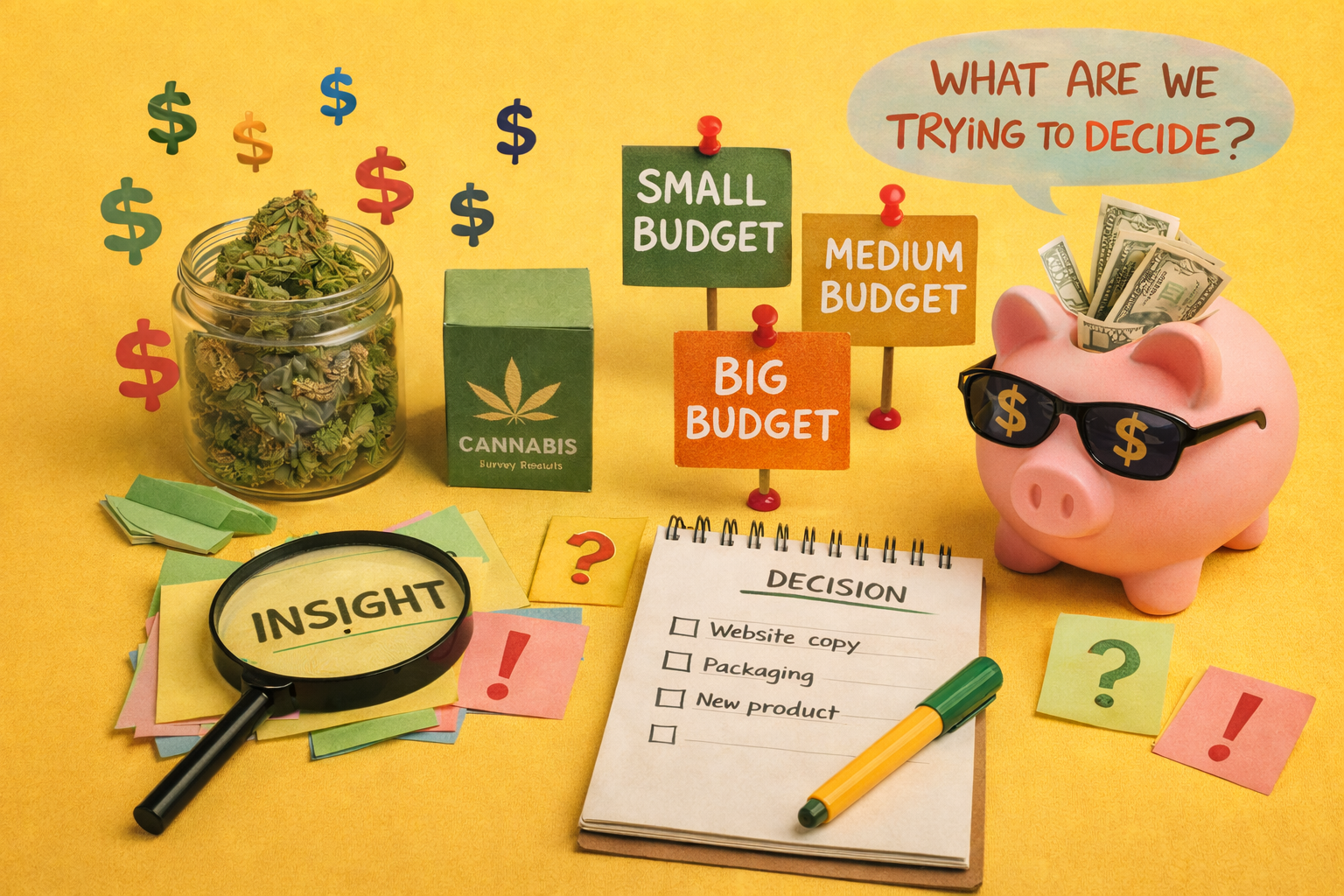
The size of the research should match the size of the decision. So when people ask how much money a company should spend on research, the real answer is this:
The Research Budget Rule Most Teams Forget
Think of research in three layers.
Small decisions: these rarely require a large study. A handful of customer conversations or a quick survey can surface the insight you need.
Messaging tweaks
Website copy
Social content
Product descriptions
Medium decisions: Here you may want structured interviews, concept testing, or small focus groups.
Packaging changes
Product flavors
Brand positioning
Campaign creative
Big decisions: This is where larger surveys or third party research partners can become valuable.
Launching a new product line
Entering a new market
Repositioning a brand
A Simple Research Habit for Cannabis Brands
Research does not need to feel complicated. In fact, the most useful insights usually come from consistent small actions.
Start here.
Talk to five real customers
Ask what made them try the product.
Ask what almost stopped them from buying.
Ask what they wish brands explained better.
Watch where people hesitate
Look at product reviews, website search terms, and customer service questions. These moments reveal confusion faster than surveys.
Test small improvements
Rewrite product copy using the language customers actually use.
Add clearer guidance around dosage, effects, or timing.
Adjust visuals based on how people interpret your packaging.
Track a few meaningful signals
Repeat purchase rate
Top search terms on your website
Checkout starts
Customer questions or concerns
A few signals watched consistently will always beat a dashboard full of numbers no one uses.
Common Research Mistakes to Avoid
Even brands that invest in research sometimes miss the point. Research should challenge assumptions, not confirm them. Here are a few traps to watch for:
Asking leading questions that push customers toward the answer you want
Surveying only loyal fans instead of near buyers or churned customers
Collecting metrics that never influence real decisions
Confusing correlation with causation without testing changes
Why This Matters for Cannabis Brands
Cannabis consumers are still learning. Many buyers walk into dispensaries unsure about dosage, effects, or even where to begin. That means cannabis brands are not just selling products. They are building confidence and trust. Research helps brands understand the emotions behind those decisions. The uncertainty. The curiosity. The hesitation.
When brands listen carefully, they design better experiences. Clearer packaging. Smarter education. More meaningful storytelling and that is where real growth begins.
One Final Thought
Marketing research is not a report.
It is a rhythm.
A rhythm of asking better questions, noticing patterns, testing ideas, and learning from real people.
The brands that build this habit rarely waste money guessing.
They simply keep getting better at listening.