Ask It Right: When to Use Qualitative vs. Quantitative Research in Cannabis Marketing

By: Shaniece N. Fullove, MPA
Not all questions are meant to be answered the same way.
Some questions need numbers. Others need stories. In cannabis, where behavior, emotion, and perception are deeply layered. Knowing the difference isn’t just helpful, it’s everything.
Before we go any further, let’s break this down simply.
Qualitative research is about understanding how people feel and why they behave the way they do. It’s rooted in conversations: think interviews, open-ended questions, real dialogue.
Quantitative research, on the other hand, is about measuring. It turns behavior into numbers, percentages, rankings, trends. So you can see patterns at scale.
One gives you depth. The other gives you direction.
The truth is, you can’t build a strong cannabis brand without both. The way you ask a question determines the kind of answer you’ll get. And the kind of answer you get determines how your brand grows.
🌿 When You Need to Understand — Go Qualitative
There are moments when data alone just isn’t enough. You don’t need percentages. You need perspective.
That’s where qualitative research comes in, using interviews, open-ended surveys, and focus groups. This is where you sit with your consumer and actually listen.
Think about a first-time cannabis user. You could ask:

“How likely are you to purchase again?”
Sure, you’ll get a number. But that number won’t tell you why they’re hesitant.
Now flip it:
“What made you feel unsure about your experience?”
Now you’re getting somewhere!
In cannabis, qualitative research helps uncover things like:
Fear around dosage or overconsumption
Confusion around product types (flower vs. edibles vs. vapes)
Emotional drivers like relaxation, creativity, or sleep
This is the kind of insight that shapes branding, packaging, and messaging.
“If you don’t understand how your customer feels, you’ll never fully understand how they buy.” – Fullove
📊 When You Need to Measure — Go Quantitative
Once you understand the why, it’s time to measure how many.
That’s where quantitative research steps in using structured surveys, analytics, and performance data. This is where patterns start to form.
Let’s say your qualitative research reveals that customers care about flavor and onset time in edibles.
Now you can ask:
“Which matters more: flavor or onset time?”
“How satisfied are you with current edible options?”
Now you’re not guessing. You’re measuring.
In cannabis, quantitative research is key for:
Identifying top product preferences
Measuring brand awareness
Tracking customer satisfaction
Supporting product development decisions
It turns insight into scale.
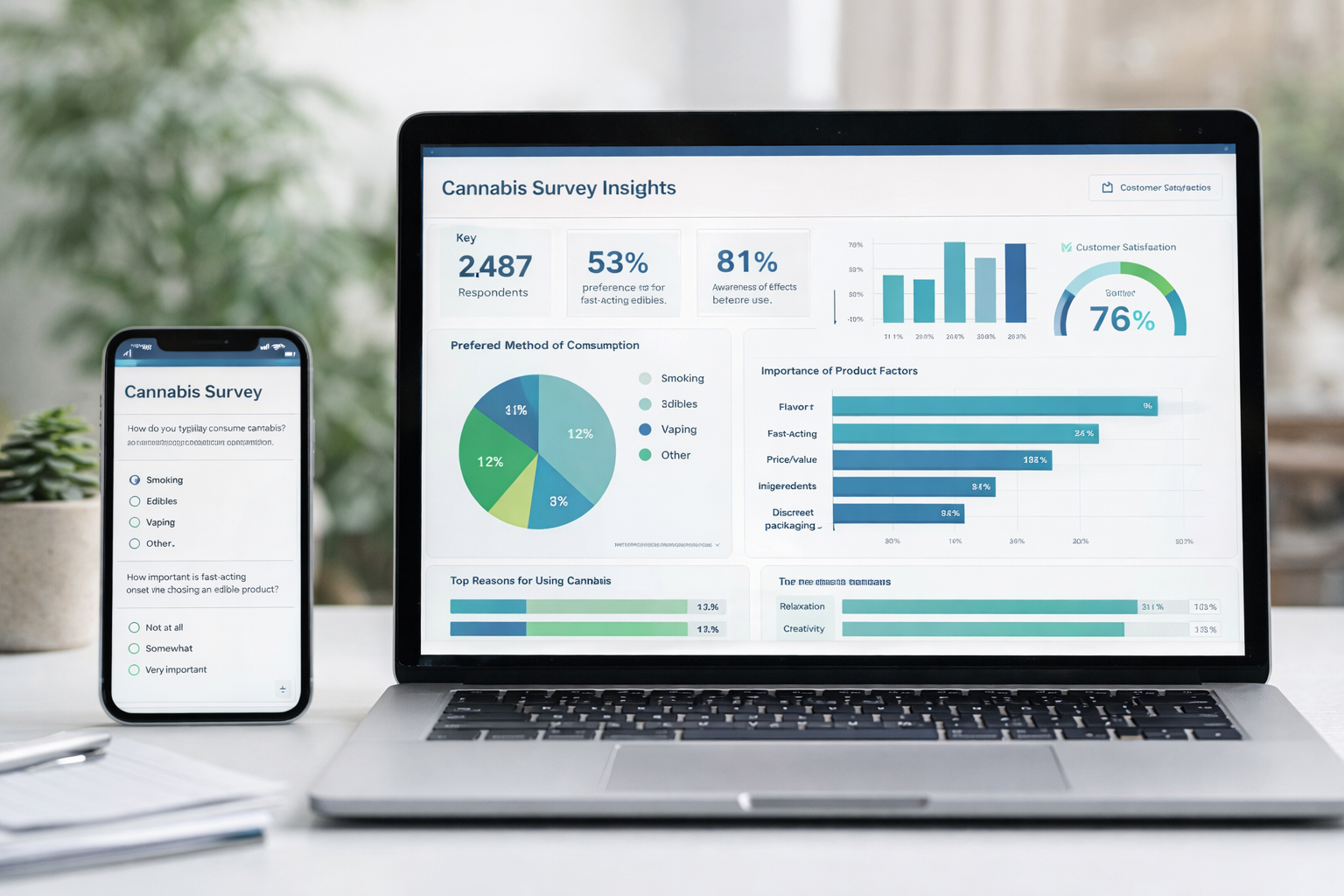
⚖️ It’s Not One or the Other
Here’s where most brands get it wrong: they pick one and ignore the other.
But the strongest strategies come from using both together.
Start with qualitative to explore the landscape.
Then use quantitative methods to validate what you’ve learned.
It’s the difference between saying:
“I think this is what our customers want.”
vs.
“I know this is what our customers want — and I have the data to prove it.”
For cannabis brands especially, this balance is critical. You’re not just selling a product, you’re guiding an experience. This requires both empathy and evidence.
💡 Ask Better, Build Better
At the end of the day, research isn’t about collecting answers — it’s about asking better questions.
If your goal is to understand your audience, go deeper.
If your goal is to scale your decisions, start measuring.
And if your goal is to build a brand that actually connects?
Then here is the bottom line.
Qualitative research gives you the story. Quantitative research gives you the scale. And in cannabis marketing, where trust, education, and experience all matter, you need both to truly grow.